
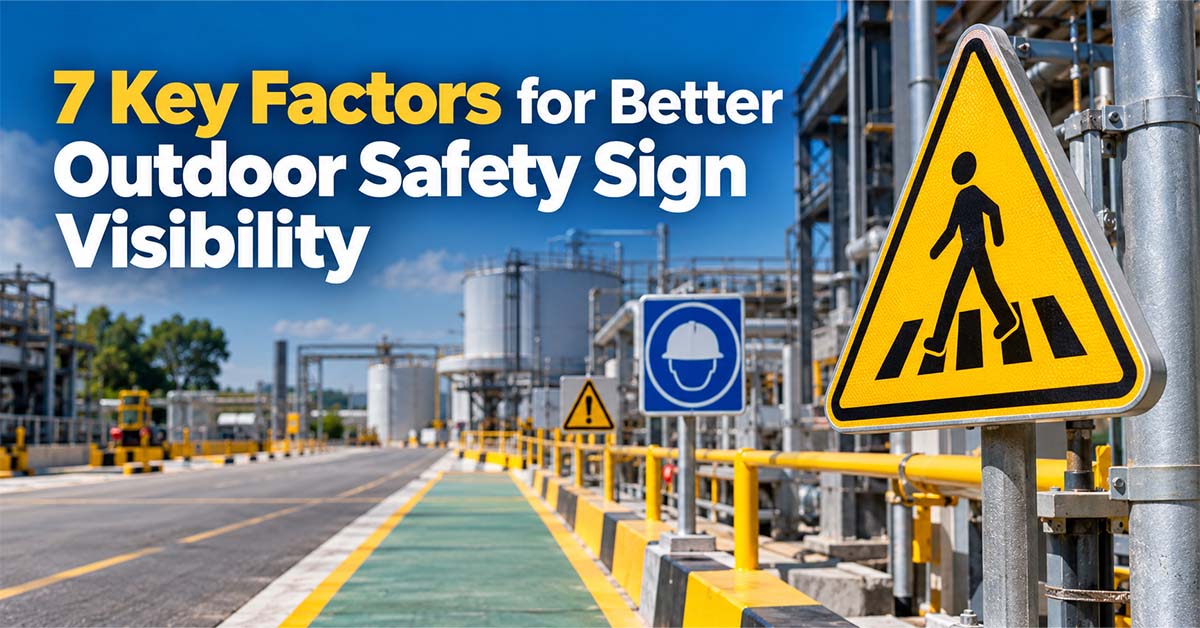
7 Key Factors for Better Outdoor Safety Sign Visibility
An emergency exit sign mounted three years ago now blends almost invisibly into a faded wall, noticed by no one until an actual emergency makes that oversight matter. Outdoor safety signage suffers from a particular kind of neglect, installed once with good intentions, then left to weather, fade, and gradually lose the visibility it was meant to provide indefinitely.
Facilities investing in proper name board makers in Chennai for branding often treat safety signage as an afterthought by comparison, despite it carrying far higher stakes. This blog covers seven factors that actually determine how visible and effective outdoor safety signage remains over time.
1. Contrast Between Text and Background
Visibility starts with contrast, and this remains one of the most commonly overlooked factors in safety sign design. Dark text on a light background, or the reverse, reads far more clearly at distance and in varying light conditions than combinations with weaker contrast. Standard safety colour coding, red for prohibition or danger, yellow for caution, green for safe conditions or emergency exits, exists precisely because these combinations have been tested for maximum recognition speed under stress.
2. Sign Placement and Sightlines
A well-designed sign fails entirely if it’s placed where sightlines are blocked by equipment, vegetation, or architectural features. Placement needs to account for where people are actually looking as they move through a space, not just where a wall happens to have available room. Signs positioned at natural eye level, along expected walking paths, and clear of obstructions perform considerably better than technically compliant signage tucked into a corner.
3. Weather Durability of Materials
Outdoor signage is subjected to the sun, rain, temperature variations and, in coastal or industrial areas, to additional corrosive elements. Materials that fade, crack or corrode quickly will diminish visibility irrespective of the original design of the sign.
Some material considerations which affect long-term visibility:
- UV-resistant coatings to prevent color fade from prolonged sun exposure
- Corrosion-resistant materials for coastal or high-humidity areas
- Weatherproof mounting hardware which will not degrade and affect sign stability
- Finishes that resist chipping or peeling under temperature changes
The wrong material is seldom apparent at first. A sign installed with inferior coatings often looks perfectly fine for the first year, making the eventual fading or corrosion appear sudden when it is actually the result of gradual wear that went unnoticed simply because no one was monitoring it early enough.
4. Lighting for Low-Visibility Conditions
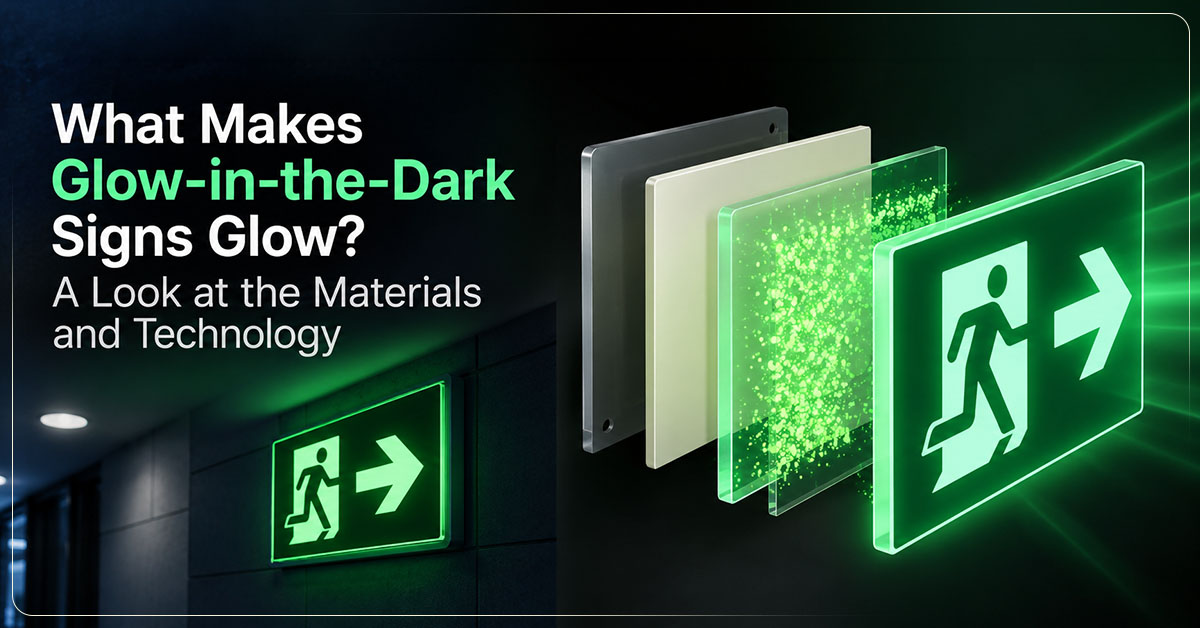
Daytime visibility only covers part of the picture. Signs need to remain legible during dusk, night, fog, or heavy rain, conditions where standard signage often becomes difficult to read without additional support. Reflective materials, external illumination, or in specific safety-critical applications, phosphorescent glow elements, all extend visibility into conditions where unlit signage simply fails.
5. Font Choice and Sizing Appropriate to Viewing Distance
Text that reads clearly up close often fails at the distance a sign is actually meant to be viewed from. Font selection and sizing need to match realistic viewing distance, sans-serif fonts generally perform better for quick recognition than decorative or serif typefaces, and sizing should account for the furthest point from which someone reasonably needs to read the sign.
6. Consistency Between Multiple Signs Within A Facility
Inconsistent signage, different fonts, colors or symbol styles across different areas of a facility create unnecessary cognitive load for anyone trying to quickly interpret safety information.Standardising design across an entire facility helps people recognise and understand safety signage instinctively, rather than needing to process each sign individually as if seeing the format for the first time.
Points worth checking for consistency across a facility:
- Uniform colour coding applied the same way throughout the property
- Consistent font and symbol style across all safety signage
- Matching sign sizes for similar sign categories and viewing distances
- Standardised placement height and positioning logic throughout
This matters most in larger facilities managed across multiple phases of construction or expansion, where signage installed years apart, by different contractors, often drifts from the original standard without anyone noticing until an audit or incident brings the inconsistency to light.
7. Regular Maintenance and Timely Replacement
Even the best-designed sign will not be effective once it is faded, damaged, or obscured by dirt and weathering. Regular inspection schedules, looking for fading, physical damage, or vegetation growth blocking visibility, catch these issues before a sign quietly stops doing its job. Facilities that treat safety signage as a one-time installation rather than an ongoing maintenance responsibility tend to discover the gap only when it matters most.
Getting this right consistently is where experience shows. Hitech Vision has spent decades working with Chennai businesses and facilities on signage built to perform under real conditions, matching material choice, illumination, and design to what each specific application actually requires.
Why This Deserves More Attention Than It Generally Gets
Safety signage sits in an unusual category, rarely noticed when it works correctly, immediately critical the moment it doesn’t. Facilities that invest properly in contrast, placement, materials, and ongoing maintenance build signage that performs reliably across years of weather exposure and daily use, rather than degrading quietly until an incident exposes the gap.
Beyond basic compliance, well-maintained signs build immediate trust with visitors, reinforce operational safety standards, prevent costly legal liabilities, and ensure everyone on site can identify critical exits instantly during high-stress situations.
Building Signage That Actually Works When It Matters
Outdoor safety sign visibility isn’t a single design decision, it’s an ongoing combination of contrast, placement, material durability, and maintenance working together over time. Facilities that get these seven factors right build signage people can rely on, in daylight, at night, and years after installation. For facilities looking to review or upgrade their signage setup, working with an experienced provider of sign boards Chennai businesses trust ensures these details get addressed properly from the outset rather than discovered as gaps later.